Can scent effect our mood or memory. Aromatherapy is a natural therapeutic treatment that utilizes this aspect of our physiology - specific essential oils are thought to influence our consciousness in certain ways. It is known that the sense of smell is directly transmitted and processed in the limbic system. This part of the brain is related to memory and emotions. Perhaps you have experienced a strong memory associated with a specific scent. Has a smell ever taken you back to a time or place in your life?
Studies have supported the use of essential oils to modulate mood and stimulate specific emotional responses. A variety of studies have shown unique effects from different essential oils.
One study showed significant differences on objective measures of cognition and subjective influences on mood between subjects exposed to the aroma of rosemary and lavender oils, when compared to a control group exposed to neither. Lavender was found to relax subject while rosemary made them more alert.
Another study supports these findings. Lavender was found to relax subjects, decrease anxiety and was supported by increased beta power on EEGs. Subjects were also faster and more accurate in mathematical computations after aromatherapy. Subjects exposed to rosemary oil were found to be more alert as seen in increased frontal alpha and beta power on EEGs. They were found to be faster but no more accurate on mathematical calculations after being exposed to rosemary oil.
Though these studies show significant changes when exposed to specific essential oils, it is unclear to what extent these differences are due to direct biochemical effects or psychological associations between subjects, scents and personal experiences.
At least one study suggests that these aromas may actually interact with ion channels in our cell membranes. A study published in the Journal of the Federation of Societies of Experimental Biology showed that a compound from frankincense seemed to alleviate depression and anxiety through triggering a poorly understood ion channel in cells of the brain (link).
Researchers believe these findings may lead to the development of new anti-depressant drugs, all the while many natural health practitioners have already been utilizing these substances for depression and anxiety for hundreds of years with good results.
Showing posts with label science. Show all posts
Showing posts with label science. Show all posts
Saturday, August 9, 2008

Tuesday, July 22, 2008
Lunacy!
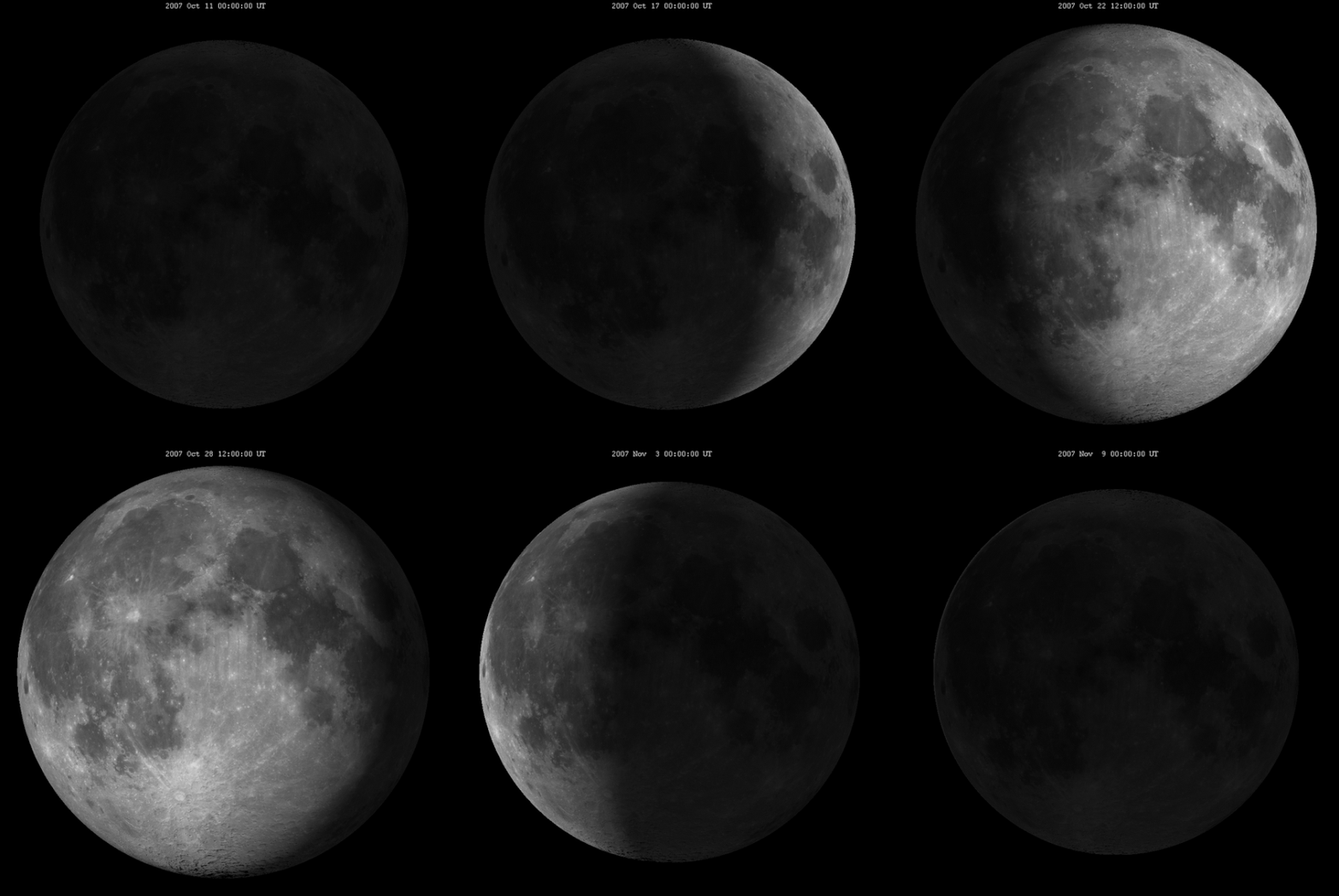
Modern science has taken a look. Researcher's conclusions vary between studies. Some show strong statistical evidence for a full moon effect, others not so.

One study published in the British Medical Journal indicated a strange trend in increased animal bites occuring during the time of the full moon.
Number of animal bite admissions to an emergency room were compared from 1997 to 1999. The records of 1621 patients admitted for animal bites were correlated with the lunar phase. They concluded a strong correlation between an increase in animal bite and the full moon.Picture Source: BMJ
 Another study from Australia seems to contradict these findings. This study also published in BMJ compared dog bite admissions to an emergency room over the period of one year. No increase in dog bite admissions was indicated during the full moon.
 Interestly there was a weak correlation though not statistically significant with a decrease in dog bites in relation to the moon's fullness. When looking at the graph of the lunar year, I can't help but notice a quite obvious pattern related to the lunar cycle.
Picture Source: BMJA Study published in Experientia found a strong correlation with a decrease in the predatory behavior of mites in relation to the full moon.
Research published in Current Urology tracked urological emergencies in relation to the lunar cycle. Though the findings from this study were not statistically significant, there was a general trend of urology emergency escalating during the full moon.
The verdict is still out from scientific research. If there is a relationship how does it effect behavior. Light has been found to effect some hormonal cycles. Our circadian rhythm or sleep cycles based on the pineal gland's release of melatonin are known to be related to light exposure. Could the brightness of the full moon shift our biochemistry.
Louise Lacey wrote a book in the 70s called Lunaception. In the book, she describes how with the use of a night light in her bedroom, she was able to synchronize her menstrual cycle with the moon phases. Since then Lacey has taught her technique to many women claiming to have similar results. Can the light of the moon effect hormonal cycles. To my knowledge there has not been much scientific research in this area. However, many claim to use this technique successfully in understanding and becoming aware of their fertility. For more information on fertility awareness, click here.
Some mystical traditions relate the light of the moon to metaphysical energies. It is thought that one can harness the energy of the moon for one's own purposes. Some shamanic traditions use the natural cycles of the moon in healing. Such traditions believe it is beneficial to time healing with the natural energetic trends of the environment. Thus it would be beneficial to build a persons immune system or somehow strengthen them during the period when the moon is heading towards becoming full - waxing. During the waning phase or as the moon transitions from full to new it would be beneficial to try and eradicate an infection or decrease a tumor. In other words the waxing phase of the moon is mystically connected to building, while the waning phase is associated with taking apart or diminishing.
Click here to see a current moon phase calendar. Does the moon effect behavior? Watch the moon and see for yourself.
Animated image (top) shows moon phases and libration (the wobble) in high speed - available through Wikipedia.
Subscribe to:
Posts (Atom)


